Part 2 of the autonomous franchise series. Part 1: a business is a minimum of three automations.
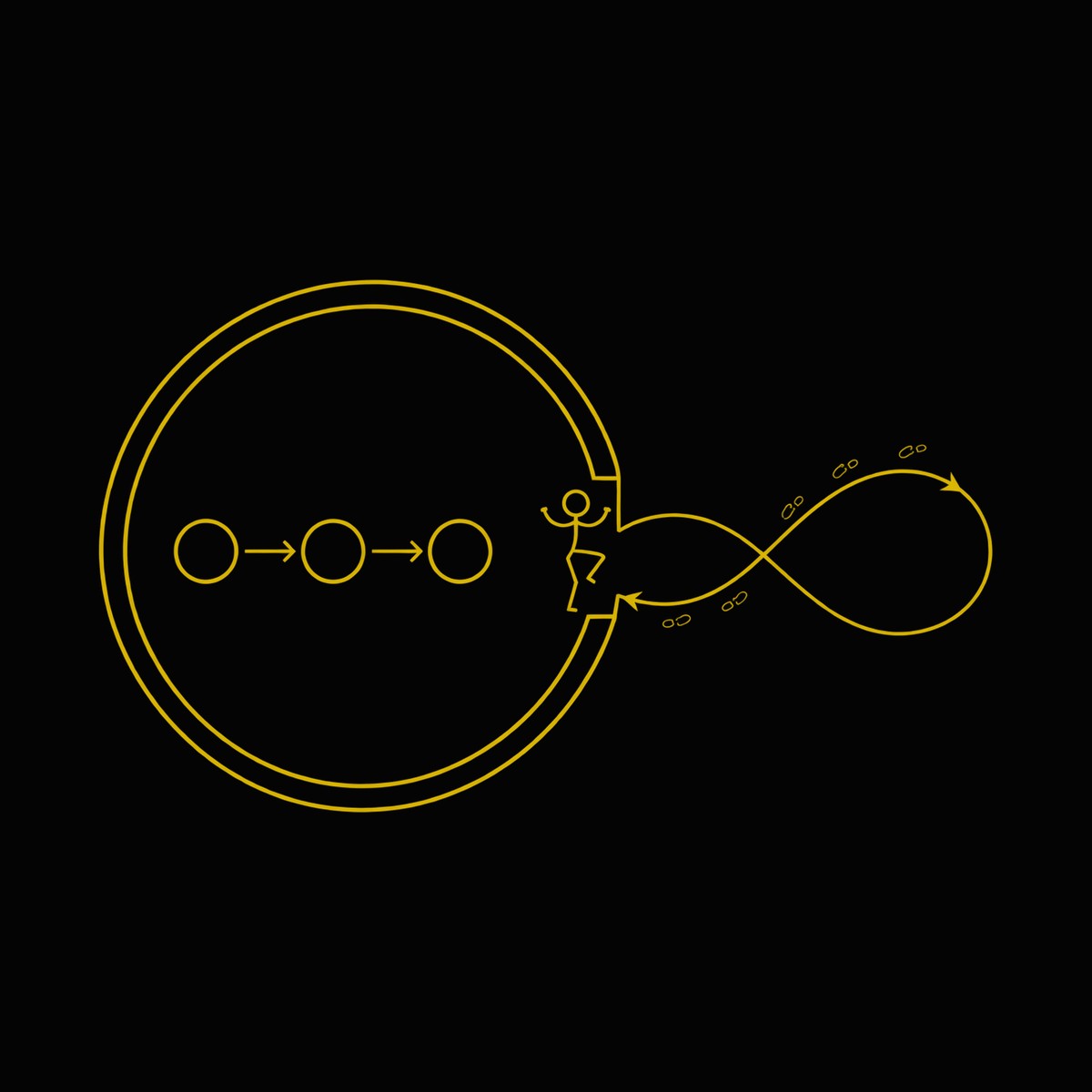
Most people live inside a loop. Wake up, trade hours for money, pay the bills, repeat. Miss a month of work and the bills still arrive. Some people call it the rat race. Some call it the matrix.
In November 2023, in a conversation with Rishi Sunak in London, Elon Musk put a name on where AI might take us: "We won't have universal basic income. We'll have universal high income." He was talking about a whole economy run by AI, some time in the future.
We think you do not have to wait for that. You can build your own version now, one loop at a time.
Enough is the whole game
Set up automations that bring in enough to cover your bills. Rent, food, the basics, every month, whether you worked that month or not.
That is the line that gets you out of the loop. Below it, every month is a fight to keep up. Above it, your time is your own.
Notice the word: enough. Not a fortune. Not a number to impress anyone. Just enough to keep yourself out. High means high enough to get you out. Anything past enough is ego.
How you get there: franchises
In Part 1 we said a business is a minimum of three automations. One makes the ideas, one puts them on sale, and one brings people to the sale. Then all three have to run together on their own. Once that wheel has run end to end on both its platforms, where it sells and where it markets, we call it a franchise.
Each franchise that earns more than it costs adds to your income. One franchise might not cover the bills. Two might. The goal is simple: keep adding wheels until together they cover what you need.
Build enough small machines that, between them, the bills are paid.
After that, your only job: kill, fix or improve
Once the loops cover the bills, you stop doing the work by hand. You do not go back to running the business yourself. You run the loops instead. The loops tell you when something goes wrong. Kill, fix or improve is how you build, too. Once the bills are covered, it becomes the whole job.
That job has exactly three moves.
Kill it. A loop that costs more than it brings in, or that keeps going wrong, gets switched off. No sentiment. A dead loop that still runs is worse than no loop.
Fix it. A loop that broke gets repaired and restarted. Most breaks are small: a platform changed a rule, a step stopped handing its output to the next. A loop that put out something not good enough to carry your name gets fixed too.
Improve it. A loop that works gets a little better. Better ideas, a smoother sale, marketing that reaches the right people. Each improvement makes it turn a little faster.
That is the whole job description. When a loop sends a warning, you ask one question: kill, fix or improve? Then you make that one move and get on with your life.
We call it ego survival
Every kill, fix or improve teaches you something. You find out which idea was wrong, which habit was costing you, which loop you kept alive out of pride.
You do not die in that process. Your old ego does. With every iteration the old ego, the one that wants more than enough, dies. A new one survives on the other side, knowing more and needing less. There are two halves to all this: set up the franchises, then keep them alive. We call the second half ego survival.
It ties back to the line about enough. Chasing more than enough is the old ego talking. Letting it die, one iteration at a time, is how you keep yourself out.
Play, skip, play
Think of it as a game, and the game is your business. Play means the business is running on its own. You set the rhythm with two other moves: pause and skip.
While you set up the business, the pattern is pause, play, pause. The first pause is you setting the loop up. Then you press play and let it run, to see what happens. The second pause is you checking what happened.
You fix what you saw and go round again. That pattern is a phase, and you are not meant to stay in it. Its only job is to get you to maintenance.
Once the loops cover the bills, the pattern becomes play, skip, play. The business keeps playing. Skip means you do not show up at all. You step in only when a loop sends a warning. Then you kill, fix or improve it, and it plays on.
That is the winning strategy, because the game never stops and your time stays your own. Pause, play, pause is how you build. Play, skip, play is how you win and stay out. If you still need to pause and check once the loops are running, they are not ready yet.
Why this is a different life
You stop selling hours. In the old loop, your income stops when you stop. With franchises running and covering the bills, it does not depend on you showing up every day.
You stop worrying about this month. When the basics are covered, a bad week is a bad week. It is not a crisis.
You start thinking long term. Free of the monthly scramble, you can make decisions for next year instead of next Friday.
What it does not promise
No automation is certain to earn anything. Building franchises that cover your bills takes time, and a first wheel may earn little.
Loops also drift. Platforms change their rules, customers change their minds, and a wheel that paid well last year can slow down. That is exactly why the job never goes to zero. Kill, fix, improve is the price of staying out.
Being out means the loops call you when they need you. A warning now and then replaces a full day of doing.
Where to start
Write down what your bills cost each month. That is your number, your own version of universal high income. Then ask which franchise you could start building this week to cover the first part of it.
Build enough to keep yourself out. Then kill, fix or improve, and let the old ego go each time. That is all.
If you want help finding the first automation worth building, book a strategy call or start with our AI use case scorecard.
THIS ARTICLE IS THE PRODUCT
We sell it. You pay nothing.