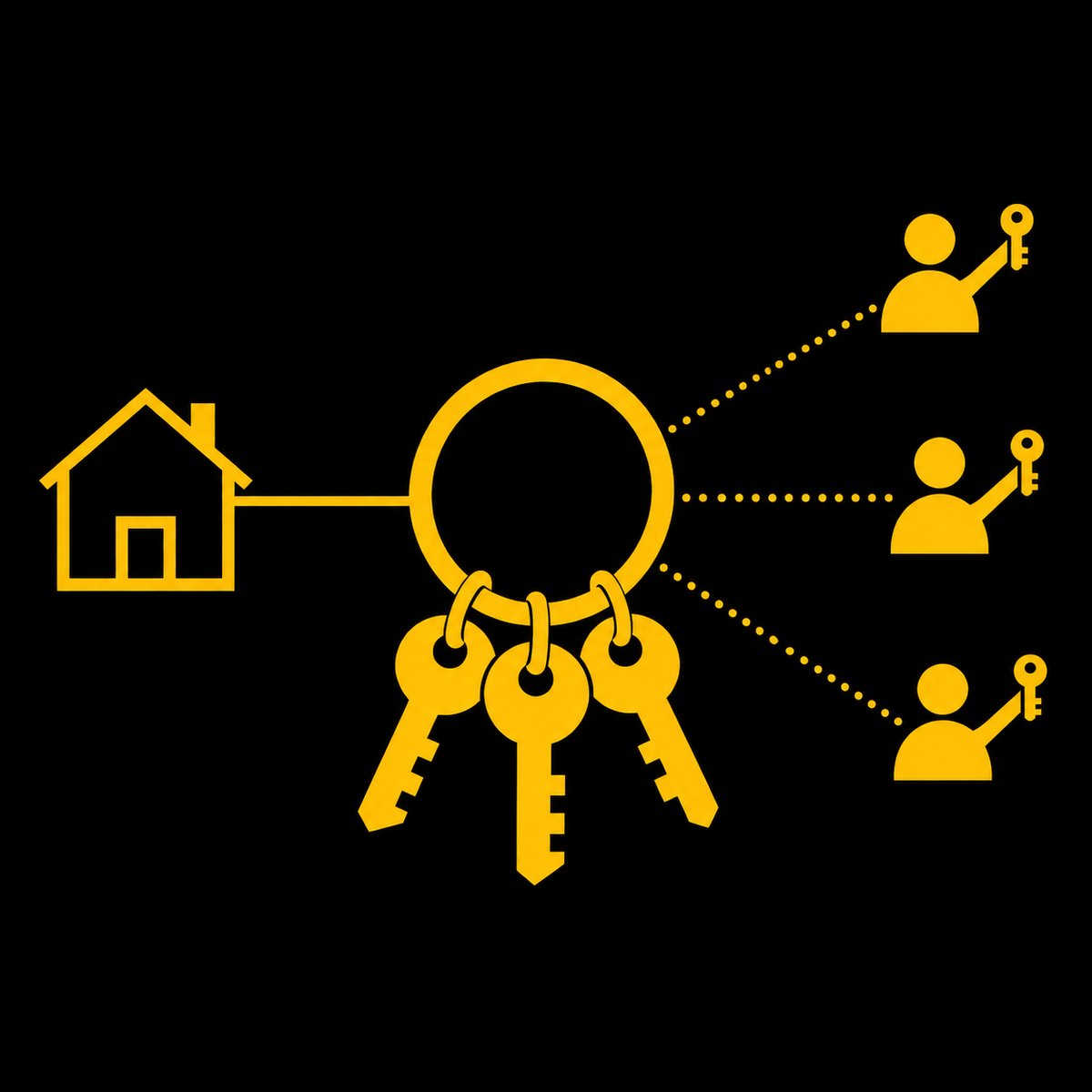
An AI system is more than its code. It runs on a set of accounts: where it is hosted, where the code is stored, the keys it uses to talk to other services, and the bill that keeps all of it switched on. Whoever owns those accounts decides whether the system keeps running.
That is easy to overlook while a project is being built, because everything works. It matters the day something changes: a bill goes unpaid, a free allowance runs out, a team member leaves, or you decide to work with someone else.
What we mean by owning the keys
Our view is that the client should own the accounts their system runs on, and pay for them directly. The builder should be invited in with only the access the work needs. When the work ends, the owner removes that access and replaces any keys the builder used, so nothing is left that only the builder can open.
In practice that covers four things: the hosting account, the code repository, the keys for outside services, and the billing for each of them. Each one should be in the client's name, with us added as a guest.
Why it matters
Continuity. If a site or an agent runs inside a builder's personal account, it stops when that account stops. A payment problem or a usage limit on someone else's account can take your system offline, and you may not hear about it until customers do.
No single person is the bottleneck. When one person holds the only login, every fix waits for them. We have seen a stuck client request wait because only one person had the logins it needed. Shared access that the owner controls lets the right person step in without waiting.
Freedom to leave. You should be able to change partners without asking permission to keep your own system. If the accounts are already yours, a handover is a change of guests, not a migration.
A clear bill. When the running costs come to you directly, you can see what the system costs to run and decide for yourself when to upgrade.
Why it is not the default
Building inside its own accounts is faster for a vendor at the start. There is no waiting for invites, and early costs are often small enough to absorb. The trouble is that this convenience quietly becomes ownership. Months later, it is easy to forget whose account the system lives in until it matters.
We have made that mistake ourselves: a set of client sites ended up running on one of our own hosting accounts, and when that account hit its usage limit the sites were at risk of being paused. Our recommendation was to move them into an account the client owns, rather than keep them in ours. So we now aim to settle ownership at the start.
What we have not solved
We do not fully practise this yet. Some of our earlier builds still run in accounts we hold, and we are still moving our own team onto shared access. Both are in progress, not finished.
Moving an existing system into new accounts is real work, and it carries its own risk while it happens. Some services make it easy to transfer ownership; others need the system rebuilt in the new account and tested again.
Ownership also does not remove the need for someone to watch the bill and the limits. It makes sure the right person can see them and act.
What it means for a business
Before an AI build starts, ask one question: if we stopped working together tomorrow, would this system keep running, and could you hand it to someone else? If the answer is yes, the keys are in the right hands.
If you are planning an AI build and want to set it up this way from day one, book a strategy call or start with our AI use case scorecard.